Insulation for Pauls Valley Houses, Ranch Shops and Farm Buildings
Pauls Valley is the Garvin County seat, a small town about 55 to 60 miles south of Oklahoma City on I-35, near the Washita River. Most of what we insulate around here is either an older house in town or a working building out on a ranch or farm, and because it is a real drive from the city, we plan each trip around the job.
At a Glance
- Permits issued by
- City of Pauls Valley
- From central OKC
- About 60 minutes south on I-35
- Main ZIP codes
- 73075
The Homes and Buildings in Pauls Valley
The older homes in the Pauls Valley town core are a mix of frame and brick houses built over several decades, some on slab and some raised over a crawl space. The attic is the place to look first in most of them. Insulation is often a few inches of old loose fill, disturbed every time a furnace, AC unit or line set went in, with open gaps at the top plates and around the attic hatch. Bath fans that dump into the attic rather than outdoors are common too. In the houses that sit over a crawl, the ground cover and the ducts under the floor deserve a look, because humid summer air moving through a vented crawl can leave the joists damp and the duct jackets dripping.
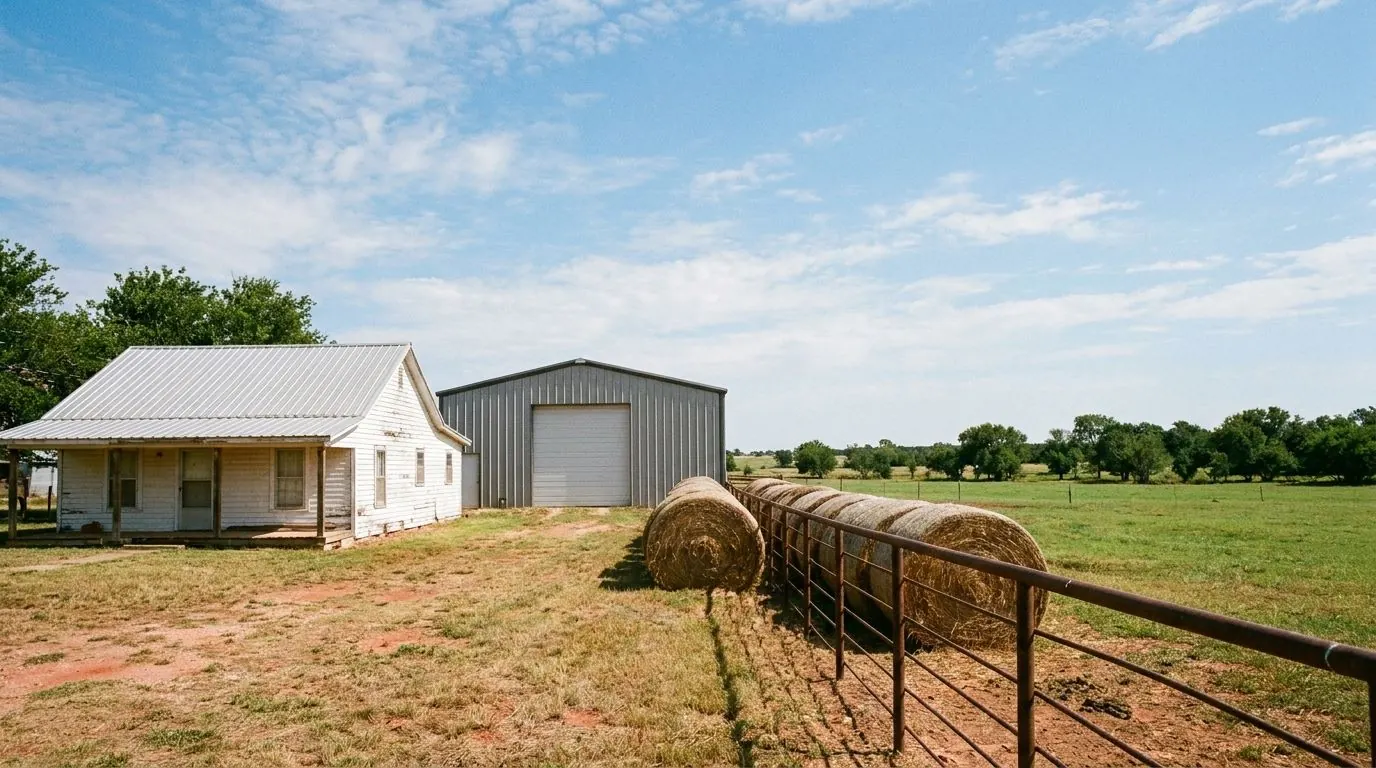
Out in the surrounding ranch and farm country, the outbuildings usually outnumber the houses. Metal shops for equipment and trucks, pole barns, hay barns and other ag buildings all share the same steel-roof physics: the panels soak up heat on summer afternoons, then cool fast at night until moisture condenses on the underside and drips. That rusts fasteners, spots equipment and wets stored feed. Closed-cell foam sprayed straight onto the steel stops the condensation and cuts the radiant heat in one pass. Where a shop is worked in, the foam needs drywall or a coating accepted in its evaluation report.
Manufactured homes are part of the rural housing here as well. Their weak point is almost always the belly, where torn bottom board lets insulation fall and leaves water lines exposed to a hard freeze.
Neighborhood Notes
Older homes in the town core
Frame and brick houses near the center of Pauls Valley. Attic air sealing, venting bath fans outdoors and a blown layer toward R-49 are the usual job, with the crawl and ducts checked on raised houses.
Ranch and farm houses
Site-built homes on rural land, often enlarged over the years. Thin attics, additions tied in at odd rooflines and exposed eaves are typical. Air sealing and baffles come before any added depth.
Metal shops and equipment buildings
Steel shops used for trucks, tractors and repairs. Closed-cell foam to the roof and walls stops dripping and heat, with a thermal barrier coating or drywall where people work. A shop that only shelters equipment may only need the roof done.
Hay barns and livestock buildings
Barns where condensation off the roof steel wets hay or tack. Foam under the roof panels solves the dripping, but buildings that house animals still need their ventilation left open, so we never seal those tight.
Manufactured homes on rural land
Bottom board patching, a re-insulated belly and protected water lines are the common work. Skirting vents stay as designed, a vapor retarder stays on the ground, and access panels and heat tape stay reachable.
Permits in Pauls Valley
Authority having jurisdiction: City of Pauls Valley
Inside the city limits, building permits come from the City of Pauls Valley. Insulation inside a permitted addition, remodel or new house is part of that permitted work, and whether an insulation-only job needs its own permit is for the City to decide. Rural properties outside the limits are unincorporated Garvin County, so check with the county for those. Agricultural buildings are sometimes handled differently by permit offices, but that is never automatic; ask the county or city, and your insurer, before assuming anything.
What Pauls Valley Homes and Buildings Need Most
Pole Barns & Agricultural Shops
Spray foam that stops roof steel sweating in barns, shops and steel buildings.
2lb Closed-Cell Spray Foam
Dense 2 lb foam for crawl walls, rim joists, concrete and steel buildings.
Intumescent Thermal Barrier Coating
Listed intumescent coatings over exposed foam where drywall won't work.
Attic Air Sealing & Penetration Proofing
Hand-sealing attic penetrations, top plates, duct boots and the HVAC platform.
Blown-In Loose-Fill Fiberglass
Light, non-settling loose-fill fiberglass, with wind dams to protect the eaves.
Mobile & Manufactured Homes
Bottom board repairs, belly insulation and skirting seals for manufactured homes.
Insulation in Pauls Valley: Questions
How do you handle a job as far south as Pauls Valley?
Our hay barn roof drips on cool mornings. Will spray foam fix that without trapping moisture in the hay?
Should we insulate an old farmhouse we only use part of the year?
Insulation Work in Pauls Valley?
Tell us the address and what is going on. Spray Tech Insulation works across Pauls Valley and the surrounding area, and we will tell you what the job needs before we price it.